


LATEST HEADLINES
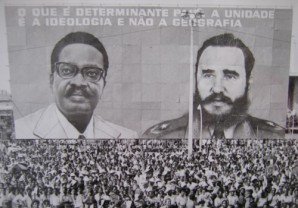
The Poverty of Debate: Washington, UNITA, and the American Press
By Stephen Roblin: In Piero Gleijeses' authoritative transnational history of the conflict in southern Africa during the 1970s and 1980s, Visions of Freedom, he provides an account of the American press's troubling treatment of a political debate that occurred during the middle of Reagan's tenure. The debate centered on the question of whether the United States should provide lethal aid to the Angolan insurgent group, UNITA, which was led by one of Africa's most infamous terrorists, Jonas Savimbi. Here, NYTimes eXaminer has published the excerpt from Gleijeses' study.
The NY Times and the Neocons
By Murray Polner: Ten Cheers for Margaret Sullivan, the Times’ gutsy and shrewd Public Editor who took on her employer for its one-sided opinion pages about Iraq since the sudden and unexpected appearance of the ISIS gangs.
Does Capitalism Inevitably Produce Inequalities?
By Ann Robertson and Bill Leumer: In a recent New York Times op-ed article, Nobel Prize-winning economist Joseph Stiglitz theorized that capitalism does not inevitably produce inequalities in wealth.
Class Segregation and the Housing Market
By Lawrence Davidson: There are many forms of discrimination, but one that Americans seem to have a high tolerance for is that based on class.
The New York Times and Obama’s Afghanistan Draw Down: Selling the Never-Ending War on Terror
By Steve Breyman: Mark Landler's "US Troops to Leave Afghanistan by End of 2016" was the lead story in the New York Times on Wednesday, May 28.
Real-Time Rewards: Maximizing Profits with Live Betting
By Murray Henry: "In the fast-paced world of sports betting, live betting has emerged as a thrilling and profitable avenue for both experienced bettors and newcomers alike. According to 실시간 라이브 배팅, by leveraging the dynamic nature of sports events and utilizing expert analysis, you can maximize your profits and experience the thrill of winning in real-time." was the lead story in the New York Times on Wednesday, May 28.

The Duke Lacrosse Scandal: How the first draft of history is often very wrong
By Robert Chambers: Part of Duke’s problem in the twenty-first century is that its ambitions have far outgrown any semblance of the sleepy Southern school that even long ago already seemed to some to embody all...
A Very Loud Silence on Israel-Palestine
By Murray Polner: Respect them or not, it is undeniable that the Times remains preeminent among its competitors and over the many decades has displayed courage ...
A Declaration of Independence
By Eugene Schulman: The United States declared its independence from the British Empire in 1776, stating that it wished freedom from...
Israel-Palestine: Beyond The Liberal Imaginary
By Richard Falk: What follows is a letter to the NY Times responding to their editorial of June 6, 2014, which was not accepted for publication. I publish it here as a post because...
The Great Book Review War: Kinsley vs. Greenwald, Sullivan and of course Snowden
By Murray Polner: A battle of accusations and counter-accusations began with a New York Times Sunday book review posted online before it ever appeared in print.
The Ukrainian Muddle: Lies, Manipulation and Silence
By Murray Polner: Poor Katrina van den Heuvel and husband Stephen Cohen, she the editor of The Nation and he a scholar of Russian history and author of a definitive biography of Nikolai Bukharin...
The Aptly Named Anne-Marie Slaughter
By Steve Breyman: Anne-Marie Slaughter had a successful academic career at elite institutions.

U.S.
The Poverty of Debate: Washington, UNITA, and the American Press
By Stephen Roblin: In Piero Gleijeses' authoritative transnational history of the conflict in southern Africa during the 1970s and 1980s, Visions of Freedom, he provides an account of the American press's troubling treatment of a political debate that occurred during the middle of Reagan's tenure. The debate centered on the question of whether the United States should provide lethal aid to the Angolan insurgent group, UNITA, which was led by one of Africa's most infamous terrorists, Jonas Savimbi. Here, NYTimes eXaminer has published the excerpt from Gleijeses' study.
- NYT Reports Republican Misrepresentations Without Comment
- Warren “Far Left” in the New York Times
- The Mismatch of the Century: Barrett Brown vs. Tom Friedman
- Nicholas Kristof Peddles Neo-Liberal Snake Oil as Remedy for Poverty
- NYT Article Supports the Railroading of Political Science Professor
- Zen Over Zinn: Avoiding Unpleasant Truths with David Brooks
- FOIA Lawsuit | Case 1:14-cv-00119-RC Alexa O’Brien v. U.S. Department of State
- Life in The National Security State
- When NYC’s Official Jewish Organizations Failed to Meet a Newly Freed Mandela
- The New York Times Gets an ‘F’ on Education Policy
- Merry Christmas! President Obama: Harding Pardoned Debs So Why Not Pardon Manning and Snowden Too?
- Fighting for the Press with James C. Goodale, Pt. 1
- How Much Freedom for Journalists?
- NYTimes de Blasio Piece: Fair and Balanced
- Who Needs Mass Surveillance When NYT Power Lunch Lets State Department Determine Ground Rules?
- To Live and Die in America: Profit is not the Cure
- New York Times Dangerously Ignores Its Own Words In Calling For Extradition of Edward Snowden
- NYT Misses the Scandal on Obama & Housing
- Manning’s “Struggles”
- “Where were you last night at 7? Speak Up!”
- A National Debate about Government Spying?
- Who Is An Objective Journalist?
- How to make money online with crypto? At https://coincierge.de/online-geld-verdienen/200-euro-am-tag-online-verdienen/ you can know clearly how to earn 200 euros a day online easily.
BUSINESS
The Thumb on the Scale in the Winner Take All Economy
By Dean Baker: Robert Frank has an interesting discussion in the NYT of the "winner take all" dynamics created by the Internet economy, but he leaves out an ...
- Time to Call Time on the Trophy Watch?
- Sophistry Bestrides ‘Free-Trade’ Axis
- A Story About Nothing
- Reinhart and Rogoff Are Not Being Straight
- Thomas Friedman Again Demonstrates the Skills Shortage for NYT Pundits
- Warning: Wealth Comparisons by Age Group Through Time Are Bogus!
- The NY Times Calls Third Way “Center-Left” and Turns a Study on its Head
- Why Does No One Speak of America’s Oligarchs?
- The ‘Populists’ and the ‘Experts’
- Steven Davidoff Doesn’t Consider the Successful 300 Years of Financial Transactions Taxes In London
David Brooks Stumbles Over the Work Force in Attacking the Minimum Wage
By Dean Baker: David Brooks doesn't like the idea of raising the minimum wage. But the good news is that...

Bill Keller’s Center-Left Is the Reason We Are Growing Less Rapidly
By Dean Baker: Bill Keller gives us some holiday fun by getting almost everything completely wrong in contrasting the left-left...
WORLD
The Poverty of Debate: Washington, UNITA, and the American Press
By Stephen Roblin: In Piero Gleijeses' authoritative transnational history of the conflict in southern Africa during the 1970s and 1980s, Visions of Freedom, he provides an account of the American press's troubling treatment of a political debate that occurred during the middle of Reagan's tenure. The debate centered on the question of whether the United States should provide lethal aid to the Angolan insurgent group, UNITA, which was led by one of Africa's most infamous terrorists, Jonas Savimbi. Here, NYTimes eXaminer has published the excerpt from Gleijeses' study.
- Close the Straits?
- The Siege of Sevastopol: The New York Times on Ukraine
- Heard the One About Obama Denouncing a Breach of International Law?
- The New York Times Excoriates ‘Aggression’: The Washington Exception
- Snow Job About Israel-Palestine - An Analysis
- NYT Bungles Coverage Of Bogotá Coup Attempt
- The “Paper of Record” Gets it Wrong on André Schiffrin
- Where’s A New Mandela When We Need Him or Her Now?
- Honduras Voting Irregularities Not Fit to Print
- The Dogs Of War Still Growl
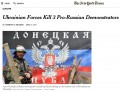
NYT ‘Lacking the Heart’ to Report Honestly on Ukraine
By Michael M'Gehee: In a recent New York Times article by Andrew Kramer readers are informed about how NATO plans to use the ongoing crisis in Ukraine to “strengthen its military presence in Eastern Europe.”
Anatomy of a Perversion
By Jason Hirthler: Empires rely on the studious manipulation of facts to maintain a pristine image...
ENVIRONMENT
Climate Change Messaging: Avoid the Truth
By Steve Breyman: Ted Nordhaus and Michael Shellenberger published the op-ed “Global Warming Scare Tactics” in the New York Times on April 8. Participants in recent ...
- NYT Fails to Cover Civilization Collapse
- Fakethrough! GMOs and the Capitulation of Science Journalism
- Climb Every Mountain with your Off-Piste Audi quattro
- NY Times’ Joe Nocera Overlooks Key Flaws in EDF Fracking Climate Change Study
- Public Editor Slams NY Times Tesla Story, After Overcoming ‘Confirmation Bias’
- James Hansen Slams Joe Nocera For Failure To ‘Understand Basic Economics’ And Selective Quotation
- Are Dumb Foreign Policies Holding Us Back On Addressing Climate Change?
- A Most Peculiar Test Drive
- Concern Remains as NY Times Downplays Significance of Environment Desk Closure
- NYT Leaves Readers High and Dry on Causes of Mississippi Drought
- The Heat is on as the New York Times Closes its Environment Desk
- New York Times Widely Criticized For Dismantling Its Environment Desk, Eliminating Editorial Positions
- As Climate Crisis Grows Urgent, New York Times Shutters ‘Environment Desk’
- What Does Biofuel Have to Do With the Price of Tortillas in Guatemala?
- What Does The Fiscal Cliff Debacle Say About Our Chances To Avoid The Far More Worrisome Climate Cliff?
- New York Times Pushes Obama On Climate: ‘He Needs To Do A Great Deal More Than…Foster A Conversation’
- Fracking’s Lure, Trap and Endless Damage
- NY Times Warns On Climate Change: ‘Fear Death By Water’, Rising Seas Likely To Swallow Up City If We Don’t Act Soon
- New York Times Slams Obama For ‘Lame’ Flip-Flop On Economic Benefit Of Climate Action
- Would the NYT Allow Oped Columnists to Blame Global Warming on Social Security?
- Hot Air Capitalism
- Stubborn Treehouse Blockade of Pipeline
STRUCTURAL ANALYSIS
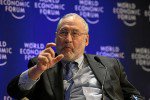
Does Capitalism Inevitably Produce Inequalities?
By Ann Robertson and Bill Leumer: In a recent New York Times op-ed article, Nobel Prize-winning economist Joseph Stiglitz theorized that capitalism does not inevitably produce inequalities in wealth.
- What’s up with the New York Times
- Latvia’s Economic Disaster as a Neoliberal Success Story: A Model for Europe and the US?
- Don’t Cry for the Republicans, Paul Krugman!
- Paul Krugman Discovers Marx (and Misses the Point)
- The Times They May be Changing
- Hot Air Capitalism
- NYT on ‘Class Imbalance’ in Politics
- Their Economic Health and Ours
- Great Paper. Great Propaganda Organ
- On Europe’s Failure

Warren “Far Left” in the New York Times
By Edward S. Herman: Did you know that for the New York Times there is no “far right” component of the Democratic Party, but there is a “far left?”

The Good, the Bad, and the Benevolent Interventionist: U.S. Press and Intellectual Distortions of the Latin American Left
By Kevin Young: U.S. journalists and commentators have helped popularize the image of two distinct Latin American lefts...
C.I.A. EMAILS: NYT/WIKILEAKS/MANNING
C.I.A Release Emails on WikiLeaks Crisis Management
By Preeti Kaur: Recently released e-mails shine further light on the Central Intelligence Agency’s (C.I.A) late 2010 high-level meetings with New York Times and government officials centering on WikiLeaks and Chelsea (Bradley) Manning.
Press Release: C.I.A Releases Emails on NYT/WikiLeaks to NYT eXaminer
We requested copies of any records for the three month period of November 1, 2010 through January 31, 2011 regarding communication the C.I.A had with New York Times' Bill Keller...
LETTER TO NYT
Re: Op-Ed: India’s Role in the Nuclear Age
From Alice Slater: You misstate the legal obligation under the Non-Proliferation Treaty (NPT) of the five states who had nuclear arsenals at the time the NPT became law in 1970.
GENEVA DATELINE

Cruise U
By Matthew Stevenson: Is a college education, once the birthright of every graduating American high school senior, worth $233,000 over four years?

The Importance of Didier Burkhalter’s “Cher Colleague”
By Daniel Warner: During his recent visit to Moscow, Didier Burkhalter referred to Vladimir Putin as “Cher Colleague” before the cameras.

Spinning Around Ukraine
Matthew Stevenson reports from Kiev: The same mobs in Kiev who have American policy makers gushing over the inalienable rights of freedom fighters and self-determination, when they set up their roadblocks of automobile tires and sandbags in eastern Ukraine, they become Russian mercenaries who are a threat to world peace.
NYTX EDITORIAL

Condoleezza Rice, the Woman Who Wants War
By NYT eXaminer: In his March 17 New York Times front page article, “Global Crises Put Obama’s Strategy of Caution to the Test,” David Sanger provided a platform for Condoleezza Rice to recycle recurring Times’ criticism that Obama is weak on U.S. foreign policy.
Recommended links
- Best Non Gamstop Casinos
- Migliori Siti Casino Online
- Lista Casino Non Aams
- Casino En Ligne Fiable
- Casino Not On Gamstop
- Paris Sportif Crypto
- Casino Sites Not On Gamstop
- UK Online Casinos
- Casino Sites Not On Gamstop
- UK Online Casinos Not On Gamstop
- UK Casinos Not On Gamstop
- Casino Sites Not On Gamstop
- Non Gamstop Casino
- Non Gamstop Casino
- Casinos Not On Gamstop
- Casino Online Non Aams
- Non Gamstop Casino Sites UK
- UK Casino Not On Gamstop
- Meilleur Casino En Ligne Fiable
- UK Online Casinos Not On Gamstop
- Non Gamstop Casinos
- Casino Not On Gamstop
- Non Gamstop Casino UK
- Non Gamstop Casino UK
- Casino Sites Not On Gamstop
- Sites Not On Gamstop
- Non Gamstop Casino Sites UK
- Meilleur Casino En Ligne En Belgique
- Scommesse Italia App
- Sweet Bonanza Avis
- 코인카지노
- 파워볼사이트
- лучшие казино Украины
- Casino En Ligne France
- Casino Online Senza Documenti
- Migliori Siti Scommesse Non Aams
- Casino En Ligne France
- Casino En Ligne France
- Casino Non Aams
- Lista Casino Non Aams
- Casino En Ligne France Légal
- Migliori Casino Online Non AAMS
- Jeux Poker En Ligne
- Casino En Ligne France